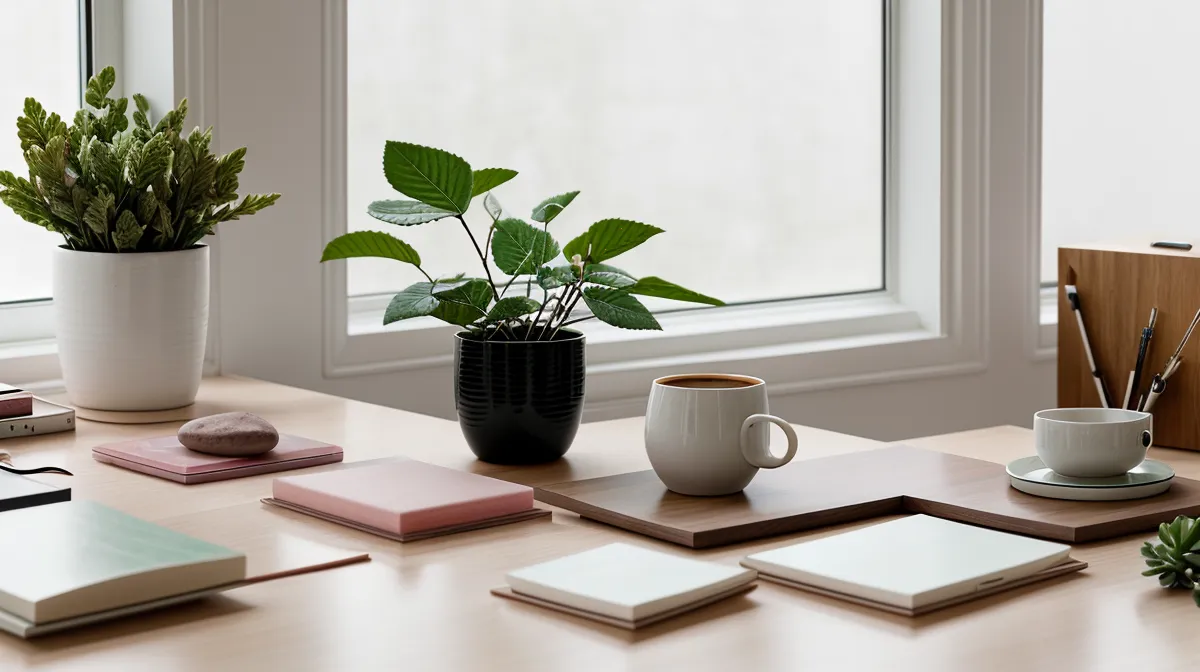
One rainy Saturday afternoon last winter, I found myself discreetly tucking a pale pink stone behind my dual monitors so no coworker visiting my Austin apartment would spot it and roast me. As a graphic designer whose job literally revolves around visual logic, systematic grids, and empirical user testing, buying a crystal felt like an outrageous personal surrender.
I wasn’t supposed to be the kind of person who buys rocks for romance. But after months of quietly testing manifestation techniques—scripting before bed, testing out the 369 method, journaling until my wrist cramped—I was secretly curious. I didn’t actually believe a rock possessed celestial powers to summon a partner to my front door. Yet there it was, sitting on my walnut desk.
The Rational Case for Rocks: Rethinking Manifestation Tools
Okay, hear me out. If you tell any sensible person that placing a mineral on a nightstand will make someone fall in love with them, they should look at you sideways. For months, that exact skepticism kept me from touching anything remotely crystal-related. It smelled too much like internet-guru nonsense.
The turning point happened when I stopped viewing crystals as metaphysical transmitters and started treating them as tactile, psychological priming devices. In cognitive design and behavioral psychology, physical objects frequently serve as touchstones—sensory triggers that interrupt repetitive cognitive spirals and redirect focus. If I could use an ergonomic trackball to retrain my wrist posture, why couldn’t I use a physical object to retrain my dating habits?
Here is my honest take: stop using crystals to attract external partners. That approach never worked for me and only made me feel slightly unhinged while checking dating apps. Instead, use them solely as sensory anchors to rewire your own subconscious attachment patterns and regulate your nervous system. When you change how you react in conversations, who you text back, and what nonsense you tolerate, your romantic life shifts automatically. The stone is not casting a spell; it is keeping you grounded in your own baseline.
To be clear: I am a graphic designer, not a therapist, relationship counselor, or medical professional. My observations come entirely from my personal trial-and-error experiments in my own apartment. If you are working through genuine attachment trauma or deep relational anxiety, checking in with a licensed counselor or mental health professional is always the right call.
Rose Quartz: The Daily Self-Worth Baseline
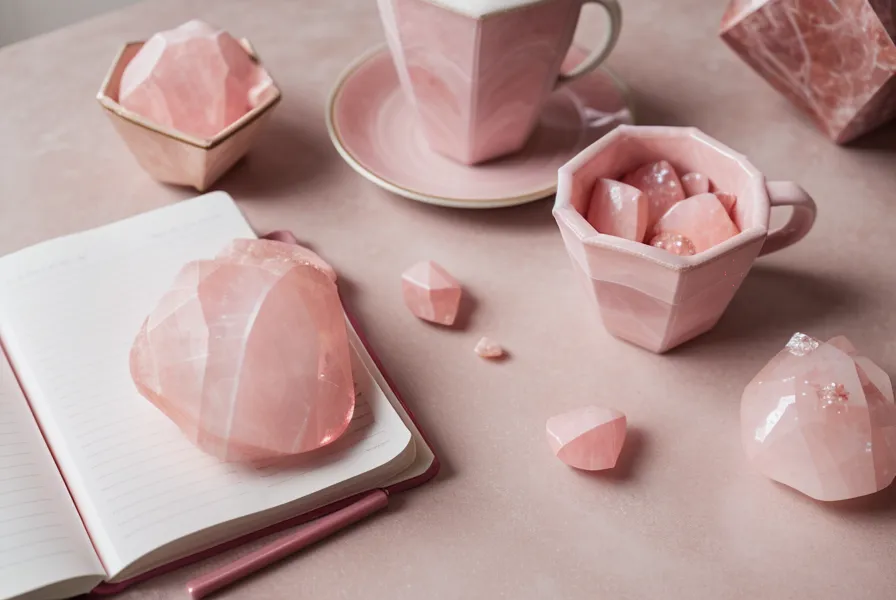
Rose quartz is the undisputed poster child of romantic manifestation, and honestly, that ubiquity made me dislike it at first. It felt basic. But once I gave it a shot, it became an indispensable part of my morning work setup.
From a purely physical standpoint, quartz is fascinating. Rose quartz rates a solid 7 on the Mohs scale of mineral hardness, and its delicate pink hue comes from microscopic fibrous inclusions of dumortierite-like minerals trapped within the crystal structure. It is dense, cool to the touch, and surprisingly heavy for its size.
Around mid-March, after about a month of daily desk work with a palm-sized chunk sitting beside my keyboard, I started noticing how it interrupted my worst workaholic habits. Whenever I had the urge to pause a client project to draft an over-eager text to someone who hadn't responded in two days, my hand would rest against the smooth mineral face. Staring at my desk thinking: if an eight-dollar rock keeps me from replying to an emotionally unavailable text, that is useful design.
I stopped treating the quartz as a charm meant to draw someone in. Instead, every time my fingers brushed its cool edge while revising typography proofs, I used it as a strict behavioral checkpoint: Am I treating myself like someone worthy of respect right now, or am I scrambling for external validation? That simple tactile cue did more for my self-worth than dozens of rushed affirmations scrawled while half-asleep.
Rhodonite: Unpacking Defensive Relationship Baggage
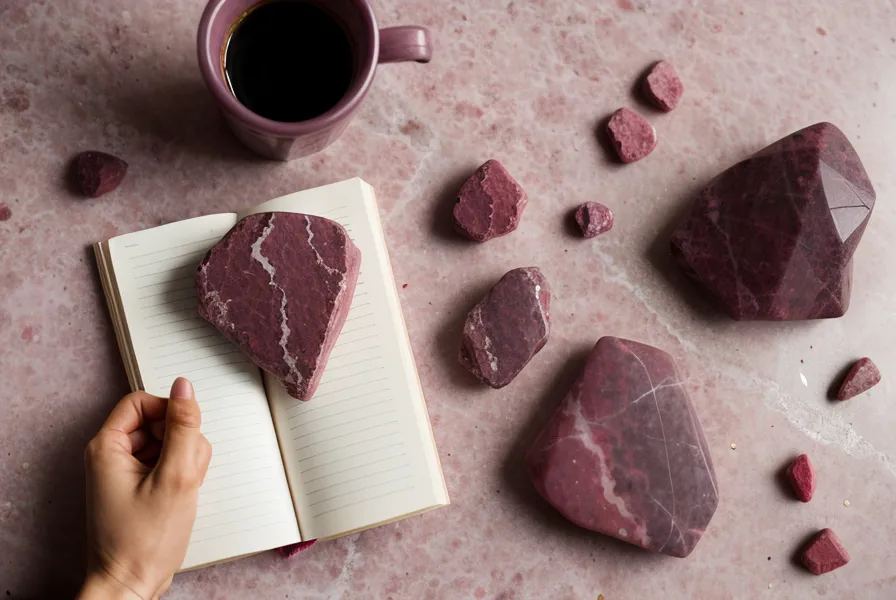
If rose quartz is the gentle baseline, rhodonite is the practical workhorse. Visually, it looks completely different—dusty, muted rose interlaced with jagged black veins of manganese oxide. Mineralogists put its hardness at 5.5 to 6.5 on the Mohs scale, meaning it has a softer, earthier texture than crystalline quartz.
I turned to rhodonite during a stretch where I realized my singlehood wasn't bad luck—it was an aggressive defense mechanism. Whenever anyone showed genuine, healthy interest in me, my immediate impulse was to make a sarcastic quip, detach emotionally, or find a trivial flaw and bolt. I was protecting myself from potential rejection by rejecting everyone first.
I started keeping a small, tumbled rhodonite pebble in my jacket pocket whenever I left the house. During the day, it became a quiet physical alarm. Whenever I felt that familiar tightness in my chest—the urge to pull back or put up a sarcastic wall during a vulnerable conversation—I would simply slide my fingers into my pocket and feel its weight.
Fingering the cold, polished edge of a tumbled rhodonite stone inside my coat pocket while waiting outside a downtown coffee shop taught me something important about my own body: my cynicism wasn't personality, it was nervous system dysregulation. Holding something tangible gave me the three extra seconds I needed to take a breath, uncross my arms, and stay present instead of retreating into self-protection.
Green Aventurine: Lowering First-Date Cynicism
I know how this sounds—adding a shimmering green stone to the mix feels deeply un-skeptical. But green aventurine earned its spot in my coat pocket during late spring, mostly because modern dating had turned me into a clinical pessimist.
By April, after months of dodging repetitive small talk on apps, going on a first date felt about as exciting as filing quarterly business taxes. I would show up to coffee shops already braced for disappointment. That mindset is completely counterproductive. You cannot build a genuine connection with another human being when your internal posture screams please don’t waste my time.
I began using green aventurine specifically as an antidote to pre-date dread. Before walking out the door, I’d hold the pebble for thirty seconds and make a deliberate mental deal with myself: tonight is not an audition for my future spouse. It is just an hour of conversation with a fellow human navigating this city. That was it.
Treating the stone as a visual reminder to stay curious rather than judgmental completely altered my demeanor. I stopped interrogating people about their five-year plans and started actually listening to their stories. Unexpectedly, dates became pleasant again—even the ones that didn't lead to a second meet-up.
The Coffee Date That Proved the Anchor Method
The real test of this entire skeptic-friendly approach arrived mid-spring. I was sitting across from someone at a sunlit patio cafe near South Congress. In past years, this was the exact moment where my defensive autopilot would kick in. He asked a sincere question about why my last long-term relationship had ended, and my brain instantly queued up a snappy, dismissive punchline designed to close down the topic.
Instead of blurting it out, my left hand reached into my trench coat pocket. My fingertips pressed against the flat face of the tumbled stone resting there. The physical cool of the mineral broke the reflex loop. It grounded me in my chair. I took a slow sip of water, softened my shoulders, and gave an honest, vulnerable answer instead of an evasive joke.
It wasn't magic. The rock didn't whisper relationship wisdom into my subconscious. But it functioned as a flawless somatic stop-sign. It allowed me to respond from intentional maturity rather than defensive panic.
That realization reminded me of how I felt earlier when I started experimenting with structured visualization tools. Much like how a late-night sketch finally grounded my manifestation practice after a year of secret scripting, having a concrete, tangible anchor transformed an abstract desire into a clear daily behavior. Whether it’s an image resting on your desk or a polished stone inside your pocket, the value isn't mystical—it’s the clarity it forces you to practice.
How to Use Stones Without Feeling Ridiculous
If you want to incorporate tactile anchors into your dating life without feeling like you’ve abandoned your rational faculties, here is the minimalist routine that worked for me:
- Pick one stone for one specific behavior: Do not buy a massive bag of crystals and spread them everywhere. Choose one stone (like rose quartz for boundary-setting or rhodonite for vulnerability) and assign it a clear cognitive rule.
- Keep it near high-friction zones: If your weakness is late-night doom-scrolling or agonizing over delivered messages, keep your stone sitting directly on top of your charging cable or right next to your trackpad.
- Use tactile contact to break thought loops: When you catch yourself spiraling into romantic anxiety or cynicism, pick up the stone and focus entirely on its physical weight, temperature, and texture for three full breaths before taking any action.
- Skip the elaborate rituals if they feel unnatural: You don’t need moonlight cleansing or elaborate chants unless you genuinely enjoy them. Washing a stone under cold tap water while resetting your intentions works just as well to reset your focus.
You don’t need to adopt a whole spiritual subculture to benefit from a simple, physical tool. If an unpretentious rock sitting quietly by your screen reminds you to hold your boundaries and stay open to real connection, then it is doing its job—no belief in sorcery required.